Igor caught up with Villagers front man Conor O'brien before his solo set at DC9 to talk about being on tour and how he feels about the album Becoming a Jackal now that its getting a good deal of attention. Listen to the feature below!
Disappears w/ Woven Bones and Far-Out Fangtooth
Kung Fu Necktie (Philadelphia, PA) June 17, 2010
Okay, I’ll admit it. As much as I like my bearded bards of folk music and hipster heroes of indie rock, my heart will always more or less belong to the lo-fi garage rock scene. I live for the fuzzed-out noise, the relentless guitars, the almost impossible to understand vocals. If I could do nothing but go to crowded warehouse shows of this variety for the rest of my life, I would probably be the happiest person on the planet. Give me your unbearably tight black jeans, your whiskey drinkers, your crappy black hair dye.
Basically, give me shows like the one Chicago band Disappears played on June 17th at Kung Fu Necktie, my venue drug of choice, with Austin trio Woven Bones and Philadelphia locals Far-Out Fangtooth. I wasn’t even planning to write this review, but I feel like it would be a public disservice not to after how incredible the night turned out to be. Turnout was modest, thanks to a Pissed Jeans concert around the corner and Game 7 of whatever everyone’s pretending to care about this week, but that didn’t seem to matter to the bands at all. Every. Single. One. KILLED. IT. See the excessive punctuation? See the capital letters? Yeah. That good. It’s really quite difficult to communicate just how much so without the frantic gestures I’m currently making at my computer. Use your imagination.
Far-Out Fangtooth is one of those bands that does garage with a hint of rockabilly, something that you might not initially notice by listening to their recordings on MySpace. Even the way the four of them were dressed highlighted their distinctive sound. One guitarist sported jet-black hair, a ripped jean jacket, tight jeans, black boots. The other wore a simple white shirt-blue jean combo and had the look of pre-fame Kings of Leon. Their female bassist was tiny and punkish, but also quite sweet, and spent most of the set sitting quietly off to the side. On drums was perhaps the most interestingly dressed guy of the bunch, wearing a shaman-poncho looking thing with complete normalcy. For their first show at KFN, Fangtooth were loud, confident, and unabashedly proud of what they were doing. Everyone noticed, too. Fun fact – they stuck around after the show for weekly resident DJ gig Night Train to spin a set, which they started out with Depeche Mode’s “Personal Jesus.” Yep.
This past Saturday Peter Wolf Crier crammed their gear into our tiny WGTB studios and delivered a soulful performance of these four songs. The duo has built a strong base in Minnesota, and after recording Inter-Be, they joined Jagjaguar and started this short but intense national tour. The small crowd that gathered to check out their performance was delighted with the intimacy of the show and impressed with the atmospheric sound they were able to so naturally create. Read Fiona's review of the album and listen to/download the four live tracks below!
and it has been a phenomenal year for music so far. We have seen (or rather heard), top-notch albums from high profile names such as The National, LCD Soundsystem, She & Him, and Beach House, as well as some surprisingly great albums from up and coming artists like Delta Spirit, Avi Buffalo, Surfer Blood, and The Tallest Man On Earth. Things don’t seem to be slowing down either, as a slew of summer releases will keep the good music coming through the sunny season. Here are some of the season’s albums we’re eagerly awaiting.
Over here at WGTB, we get pretty excited about new columns, especially in the summertime. And this one is gonna be good. Below, the first installment of DJ Emily Simpson's “Did the Intern Show Up?”: A Diary of Long Nights & Even Longer E-mail Threads From a Philadelphia Music Club.
Hello! Welcome to my new column, a venture that could just as easily be titled “What I Did During My Summer Vacation” and exists more or less for the purpose of my telling absurd stories about the people and problems I deal with on a daily basis. Since June 1, I have held the not-exactly-coveted title of intern for Kung Fu Necktie, which is hands-down the most unique bar-slash-music-venue I have ever seen. Located in Fishtown, a neighborhood of Northeast Philadelphia, it holds about 120 people at full capacity – think along the lines of DC9 or the backstage at The Black Cat.
I’m sure you’re wondering why they would even need an intern. Sucks to be you then, because I don’t have the answer to that particular question, even after the thousandth time I’ve been asked. What I can tell you (briefly) is what I actually do. I am officially or unofficially in charge of: updating the website/calendar, maintaining the Facebook and Twitter pages, keeping track of the sound techs, working as “band liaison” (aka telling them how to get their drinks at the bar), printing will-call ticket lists, losing at pool, checking IDs, working the door, helping out the bartenders, moving amps, filling out paperwork to settle with bands after shows, and texting my boss reminders about absolutely everything. There’s more, never fear. The duties of the intern – or the slave, as some of the patrons have taken to calling me – are endless and varied.
Doesn’t my job sound fun? Don’t you want to move to Philadelphia immediately and have a cage match or drinking contest to decide who gets to keep it? No? That’s okay. I actually kind of adore it. A lot of that has to do with the people, who I swear on a huge stack of vinyl I am not making up or exaggerating at all. Here’s a brief introduction, so in the future you can pretend to have a vague idea of what I’m talking about. Or not. It’s completely up to you.
Concert Review: This Will Destroy You w/ Light Pollution and Slow Six
Kung Fu Necktie (Philadelphia, PA)
June 11, 2010
I suppose I should begin this concert review with a disclaimer: I am currently an intern (whatever that means, even I'm not entirely sure yet) at the bar where this show took place. That means that I have exposure to all of the bands both before and after the show, that I get to deal with sound check and scheduling problems and cranky tour managers - the whole deal. Not that it should affect anything I write about the show, because it won't. I just thought you all should know in the interest of fair and honest journalism and all that jazz.
Allow me to actually begin this review by saying a few words about the opening bands, who are each deserving of their own article of praise. First up was Brooklyn band Slow Six, a group of five guys with an obvious classical interest in music. There were two equal violinists onstage alongside a keyboardist, a drummer, and a guitarist. No vocals were necessary for the sweeping sounds of their own miniature orchestra, the songs themselves both lulling and engaging without being too overbearing or difficult to follow. At this point, I can't say that there was much of a crowd to speak of, but those who were there found themselves unable to look away from the stage. Not showy at all, the members of Slow Six managed to grab attention solely through their prowess and obvious love of the music they were playing. And just as a fun side note from the backstage end of things, some of the guys were pretty shy and blushed a lot when they were given compliments (which happened a lot). Overall, definitely a band to look out for in the future. They're going places quietly, but surely.
Kaitlin Karano tracks the history and development of the Go-go movement in DC by highlighting the impact of Chuck Brown and how, years later, the Beat Ya Feet Kings have revitalized the genre.
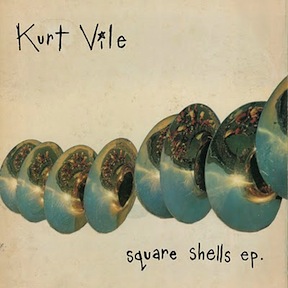
Square Shells EP 9.2 chilled PBRs out of 10 chilled PBRs
I’m not going to lie about it – when I listened to the first song off of Kurt Vile’s latest EP, I wasn’t really sold. “Ocean City” is the kind of low-key song that brings to mind a chilled out Beach Boys sound, the kind of stuff that everyone seems to be making these days. Not bad by any means, but I was worried that the entire EP would follow in that pattern.
And then I got to the end of the song, and I realized that I was completely, stupidly wrong. Kurt Vile is nothing if not innovative. That particular song, with all its guitar strumming and simple melodies, fades out with the touch of electric sound that weaves its way throughout the rest of the record. Square Shells is a landscape of sound, eclectic but somehow managing to pull it off without appearing to try too hard. Some tracks incorporate samples, some rely on electric guitar, some have vocals, one might even have what sounds like an electric accordion. I could go on and on, and honestly I could not list everything on this record.
Such a wide variety of influences makes it pretty clear that composition is incredibly important to Kurt Vile, and it shows most in tracks like “The Finder,” which has no vocals at all (and it’s the one with the accordion, which makes it even better). It’s this strangely hypnotic melody, quiet in all the right ways, and by the time it’s over you will guaranteed want to listen to it again, and again, and again…until you’re either in some kind of weird trance or you’ve fallen asleep to have blissed out dreams. This is going to sound strange, but I would actually love to see him play this in a church. Maybe on an organ.
The point here being that once I start using seemingly unrelated and random associations for songs on an album, it’s just too good or too unique to put into familiar musical terms (I could throw in the phrase “lo-fi” for good measure, if that helps at all). Square Shells is brimming with everything that is missing from so much of the new music put out these days and rated by Pitchfork. It’s “found art” at its very best and its most genuine. There is absolutely no excuse not to go get this EP immediately and put it on your permanent rotation.
There are only a few times when you can be sure that this is the last gig ever dude. This is one of those. Voxtrot has had a successful seven year stint, including the release of their well-received self titled debut, but has recently announced that this is their farewell tour. Sure, they may be pulling a Jay-Z, but are you willing to risk it?
After a self-titled debut album with an array of juxtapositions like dark-yet-catchy and disjointed-yet melodic electronic synths, Crystal Castles has arrived with a sophomore album that flaunts the band’s lo-fi skills but with an added veil of grit, haziness, and further obscurity. This new layer is immediately apparent from the opening track, “Fainting Spells” where a consistent, almost horror film-like rhythm resonates in the background while a cacophony of lo-fi sound clips, messy keyboards, and Alice Glass’s screaming vocals play over it. At first listen, it can give the impression that the listener is not as hip and young as he/she thought, but more like an angry parent protecting his or her ears from an emo teenager’s music. But wait! The second track and single, “Celestica” comes to the rescue and reminds the listener why Crystal Castles is (strangely) so…likeable!
Songs seem to redeem themselves from one track to the next, and even within the tracks themselves--as seen in “Doe Deer” where percussion beats that were once unique to the hip hop genre seem to supervise an ironic harmony between the apparent record scratching and the dance-y hip hop beat.
Parallel to the concept of “white noise” which is recognizable as a soothing and consistent wall of sound, Crystal Castles could well have discovered an aspect of sound that could be called, “black noise.” In a way, it is the musical embodiment of a strobe light. Their second album boasts loud, busy, and dark music that one could get lost in—almost terrifyingly so—but the music simultaneously lends a comfort of consistency and progression. It accommodates chillin' with the homies as well as raging at a rave. Call it a classic teenage attraction to all that is loud and rebellious, but Crystal Castles provides a powerful fortress of sound that their name alludes to from the television series She Ra: Princess of Power: “The fate of the world is safe in Crystal Castles…Crystal Castles, the source of all power.”
P.S: If you dig Crystal Castles’ second album, Crystal Castles (II) then head over to this website to download some remixes and secret tracks (for free!)
Wakey! Wakey! with The Spring Standards and Chris Cubeta
DC9
Wednesday, June 2, 2010
In the interest of full disclosure:
So, I missed the opening band. I hate doing so, and from what I’ve heard of their music and this particular performance, Chris Cubeta and the Liars Club, fronted by Cubeta, long time friend and producer of Wakey!Wakey!, this especially was not a show to miss. Roommate bonding trips to Ikea take far longer than one might expect, especially when one of said roommates leaves the brilliant blue stoneware set—the one that matches the kitchen perfectly—on a bench outside the shore. So that took a while. Mea culpa.
The Spring Standards’ setup and soundcheck took a bit longer, I think, than any of the 50-75some crowd expected. Heather Robb, the Standards’ ebullient leading lady—adorning the bluest of dresses and even brighter, bluer leggings—arranged with exacting care no less than seven instruments in front and around herself, carving a mini-niche at the center of the DC9 stage. James Cleare, with shaggy hair and the coolest of Batman tshirts, strummed and riffed anxiously on two or three of the five guitars lined on the edge of the stage. James Smith bounced on and off the stage, checking mics and his own cache of instruments, arranging a snare, tom, guitar, bass, mic and two cymbals in front of his stage left corner. A listener new to the Spring Standards wouldn’t quite know what to expect. The glockenspiel, tom, synth, organ, keys, computer and electric feel emanating from Heather’s spot would presuppose the bouncy, edgy spunk of a Ra Ra Rasputin show; indeed Ken Quam of Ra Ra was in the audience. But as the Spring Standards launched into their opening few songs, especially Skyline, scenic with clanging cymbals, suspended vocals and patient dynamics, the Standards established their unique sound—as if She & Him and the Swell Season invited the cautiously obliging White Stripes to afternoon tea.
The Moondoggiesare a four-piece band from Seattle, Washington who blend blues, soul, rock, and country to create an infectious sound that radiates with whiskey-soaked Americana. Their music is fresh, but familiar, harkening back to the woodsy, psychedelic sounds of greats likeThe Grateful DeadandThe Band, while sharing elements with fellow west coasters Fleet Foxes and The Donkeys, namely soft harmonies and laid back guitars, but a bit rougher around the edges. The Moondoggies effortlessly combine all of these different components, comfortably living in a nearly unclassifiable genre (at least not without using multiple hyphens) with a sound that lies somewhere between the west coast and the south, classic rock and modern folk. There’s something endearing about these long-haired, bearded guys and the music they make, or maybe it’s the name.
Their debut album, Don’t Be a Stranger, provided a handful of great tracks, including “Black Shoe,” “Ain’t No Lord,” and “Bogachiel Rain Blues,” and garnered them some attention from the blogosphere.Their new EP, You’ll Find No Answers Here, has more of what made that album a success - hook-heavy tunes backed by warm three-part harmonies, jangly guitars, and a Rhodes organ. The EP opens with “It’s Hard to Love Someone,” an upbeat country boogie whose piano melody and sing-along harmonies juxtapose its lyrical content about the trials and tribulations of love. From there, the music slows down, aligning with the overall melancholic mood of the lyrics, as dreary vocals and a softly plucked acoustic guitar serve as the only instrumentation on “Just Makes Sense to Me.” The third track, “Down the River,” is a departure from The Moondoggies’ traditional sound, but it works beautifully, and may be the EP’s best cut. Substituting the three-part harmonies for a female backing vocal adds a lovely dichotomy that mirrors the lyrical theme of unrequited love. The Moondoggies pick things up again and return to their bread and butter (see above) with “Sad and Lonely.” Finally, they close out the five-song EP with “Fly Mama Fly,” which poetically connects the themes established in the previous four songs over cascading guitars and vocal harmonies, telling us we’ll “find no answers here.” The EP lacks the same catchiness as the promising debut, but it seems to show more maturity and growth as songwriters, and is a tenderly crafted concept album that focuses on the pains of love. Oh, and these were just five songs that “didn’t make it onto their next proper studio” album, Tidelands, due out September 14.
Note: Catch The Moondoggies on tour with fellow Seattle band Blitzen Trapper.
In the final weekend of May, West coast WGTB warrior Scott Lensing took extensive notes on his experience at the Sasquatch! Music Festival in order to relate to loyal blog readers the performances, the atmosphere, and the best new upcoming college-rock bands. Below, Scott's account, with awesome pictures-- here's to hoping we see many of these bands come through the District in the next year.
Sasquatch! Music Festival
The Gorge; George, Washington
May 29-31, 2010
Never have I looked forward to a music festival with such giddy anticipation, with such unrealistic expectations for sonic fulfillment. The lineup? Stellar. The venue? Debilitating in its beauty. The company? Debaucherous. I knew that when I woke up on May 29, it would be the Christmas morning to top all Christmas mornings.
And so it began on the wonderfully sunny Saturday afternoon of Memorial Day weekend. Three hours southeast of Seattle, the Gorge could very well be a worthy destination for a family of four embarking upon a road trip, parents determined to expose their restless, Nintendo-addicted children to the glory of the American frontier.
But Sasquatch is certainly no place for a family. It is precisely the place, however, for a group of young ruffians looking to indulge in the sights and sounds of some of the best indie rock/pop/folk around. The clientele was surprisingly young, so much so that at times I oddly felt like a geezer. Young co-eds generally could be seen bopping about, faces freshly smeared with paint and multi-colored feathers artfully stuck in their hair. Somewhat surprisingly, Canadians abounded at the festival, with red maple leaves of every size and form on display on their cars, bodies, and bags. I was a foreigner in my own country.
The music (oh, the music!) was so captivating, though, that I was never distracted from the artists by the antics of some choice audience members. Sasquatch is comprised of four stages, with the Gorge Amphitheatre (pictured above) as the crown jewel of them all, hosting the biggest names that the festival had to offer. This stage in particular maintains a great balance for the variety of fans and musical acts. Its sloping, grassy hillside pleases those who like to experience their music lying inertly prostrate. Others, myself included, are free to dance around on the generous floor space in front of the stage.
(Check out the pics below or here and read more of Scott's article after the jump)
Avi Ascher-Shapiro helps tell the story of Life Pieces to Masterpieces, a DC Non-Profit dedicated to supporting the arts for DC's youth. The Program is undergoing a change in leadership, and its future success depends heavily on the competence of the young, new leaders.
Sometimes it’s all too tempting to pigeonhole the beardy and bespectacled gentlemen of alternative music. Each crafting his own brand of the thinking man’s pop song. All crooning those literary lyrics. But despite blending in inconspicuously with his contemporaries, Jamie Lidell’s sound stands out, sitting more comfortably among the likes of Stevie Wonder and Sly & The Family Stone. It’s clear from the video for “The Ring,” the single from his newest release, Compass, that Jamie has a lot of soul. Or perhaps that he has a lot of sand in his pants. Maybe both. That being said, his manic twitches and convulsions are not at all ill suited to the feel of Compass as a whole. All written and recorded in a few frantic fell swoops, Compass plays like an album that was, well... all written and recorded in a few frantic fell swoops. Coasting in on the tailwinds of his collaboration with Beck, Wilco and Feist on the Record Club’s recreation of Skip Spencer’s Oar, Lidell’s work on Compass draws from the same manic, experimental energy with many of the same players contributing. And as with most things done with manic, experimental energy, the results on the album are exciting, if inconsistent.
Far from the middle-of-the-road, polished soul of 2008’s JIM, Compass pulls hard in every direction. The title track encapsulates the spirit of the album, morphing from spacey and delicate to beat-heavy and dissonant and back again. From the weightlessness of “You See My Light” to the even, summery Jackson 5 sound of “Enough Is Enough” to the heavy junkyard funk of “Your Sweet Boom” (which might give Bret from Flight of the Conchords a run for his money for the title of The Boom King), the album runs the sonic gamut. Occasionally, Lidell’s nervous, deconstructed soul energy strikes gold on tracks like “Completely Exposed” or “Coma Chameleon” (Boy George, anyone? I’m sorry. He made that too easy). On the other hand, it occasionally misfires in 80s slow jam duds like “She Needs Me” or “It’s A Kiss." And following his musical compass in the millionth direction it points him, Lidell also finds himself in new, vulnerable vocal territory. If it’s possible to pinpoint the place where Beck’s influence as producer and collaborator is felt most, the heavy, desert dirge of “Big Drift” could make a good case, calling to mind the best of the hollow rawness and sorrow of Sea Change.
This is a fairly unrefined peek into Jamie Lidell’s artistic mind, which by all accounts sounds like a weird and chaotic but undeniably funky place—a place where one might reasonably spend a good amount of time squirming about in the sand shouting “There’s a rhythm to his madness!” And I’d have to agree with flailing beach Jamie. While it won’t be remembered as the album where it all came together, Compass certainly points Lidell's sound in what looks like a promising direction.
HEALTH:Disco::Get Color:Disco2. Anyone familiar with pre-2002 SAT analogy jargon can easily decipher that colon-enjambed phrase as “HEALTH’s self-titled debut album HEALTH is to Disco, the remix of said album, as Get Color, the same group’s second album is to Disco 2,the band’s second remix.” Duh.
If you didn’t follow that, or you’re from the Midwest and only ever took the ACTs, here’s the analogy in layman’s terms: Noise-punk band HEALTH made an album in 2007 called HEALTH. They then invited groups like Acid Girls, Narctrax, Nastique, and Thrust Lab to remix the entire album, the product of which they released in 2008 as Disco. Now, HEALTH has taken their 2009 album Get Color and had people like Crystal Castles, Small Black, Javelin, Gold Panda, and Pictureplane remix all of those songs into 2010’s Disco 2.
Still a little convoluted, but that’s the kind of thing one might expect from a group whose two full-length albums (to clarify, that’s HEALTH and Get Color) steer away from conventional musical properties like “rhythm” and “melody” and can more accurately be described simply as “noise.” HEALTH doesn’t even always fit that description; the first 20 seconds of the album are practically blank. While HEALTH drew criticism for being a weak imitation of noise-punk bands like Liars and Boredoms, HEALTH came closer to their goal of a synthesis of digital sound and quality dance beats with Disco and set themselves apart from the crowd.
Again, Get Color, the album on which Disco 2 is based, is more of a musical experiment than a traditional dance/pop album. However, in Get Color, HEALTH stepped up to the big league and out of the shadows of Liars and the like by introducing melody and dancibility, qualities missing in both HEALTH and, for the most part, Disco. Disco 2 predictably and proportionately climbs ever higher, as HEALTH’s strong points—a better original album and a well-practiced and developed handle on intricate synths and dance rhythms—converge.
Disco 2 reaches the balance lacking in previous albums. Tracks like the Cfcf remix of “Before Tigers” and Small Black’s take on “Severin” retain the well-crafted artistic interest of HEALTH’s originals, but transform the songs into addicting, wider-appealing versions. The album opens with “USA Boys”—not a remix but a brand new single from HEALTH that is right at home among the remixes—which sets the tone for the remainder of the CD and begs to be listened to on repeat. The rest of the album features a well-rounded mix of dance beats and ethereal, trance-y songs. While the good tracks are great, a couple of the middle songs, “In Violet (Salem Rmx)” for example, can revert to HEALTH’s older, jam-sesh style, which gets little boring. Fortunately, listening for and figuring out the overlaps in different remix versions is enough to keep you entertained through some of the more repetitive middle minutes.
Where HEALTH’s sound previously leaned towards noise, Disco 2 branches further out than before, creating a bridge between their old sound and more conventional dance music. “USA Boys” stands out as an example of the new path HEALTH seems to be headed down, and if they continue their pattern of full-length album followed by remix, then HEALTH’s next set should score high enough to get them into the college of their choice.
Recommendations: “USA Boys”, “Before Tigers Cfcf Rmx”, “Severin Small Black Rmx”
Last Wednesday in Atlanta Caroline Klibanoff sat down with The Moondoggies before they headed to Bonnaroo and DC tonight. The interview is a bit noisy, but the friendly Seattle four-piece opened up about heir break from the local Seattle scene, the music they grew up on, improving their stage banter and of course the inevitable animal-fighting WGTB question of 2010.
If all you knew about Sage Francis was that he is a hip hop artist you might be a little confused when you first start listening to his latest album release, Li(f)e. The intro to the opening track, "Little Houdini," sounds as if it belongs in a folk song, far away from the thought-provoking lyrics of a heartfelt rapper. I am a big fan of artists who aren't afraid to create music that bends genre expectations and Sage Francis does just this. If you were to separate the instrumentals from the lyrics it would sound like two completely unrelated albums. Sage Francis' extremely conscious lyrics, paired with folk-ish melodies, make Li(f)e seem darker and much more heartfelt than most hip-hop albums currently out today. There are very few notable white rappers aside from Eminem, Aesop Rock and the duo Atmosphere but Sage Francis is definitely capable of holding his own in the genre. Li(f)e is Sage Francis' fourth studio album and, as does his previous releases, relies heavily on metaphors to create vivid images through his lyrics. Sage Francis is more concerned with creating a conscious story rather than rapping about his money, cars and women, a concept many rappers today lack. Individually each track on Li(f)e is unique and each serves as an example of how hip-hop has evolved since the early 1980s. Despite this, as a whole the album seems scattered with no coherent, universal concept. The tracks, although great on their own, do not flow well throughout the course of the album which prevents me from thinking of Li(f)e as some sort of masterpiece, or even as something deserving an "A" grade. I probably won't listen to Li(f)e as an album too often but the individual tracks are great for future "chill" mixtapes to accompany long, D.C. summer nights.
After postponing their February performance due to illness, the folk-pop duo Kings of Convenience fronted an expectant crowd at the 9:30 Club on Sunday night. Few left disappointed. The Norwegian duo Eirik Glambek Bøe and Erlend Øye (also of The Whitest Boy Alive) delighted with a variously moody and energetic set interspersed with the bands witty repartee. It’s rare to see such a well-heeled performance from two musicians that are, on-stage at-least, so relaxed about their public persona. At times it bordered on the overly staged- the interlude stories that reference local geography worked too well; and the sense of musical theatre was amplified by the clown-like Øye who happily took the center of attention, grooving, crowd-surfing and conducting the audience along with Bøe.
But those rare times when it seemed like too much, mostly early in the performance, were quickly counter-balanced by the pair returning to the center and performing one of their more reflective, slower songs under two sole spot-lights. It was these moments when through squinted eyes you saw a glimpse of Simon & Garfunkel- an influence overtly referenced later when, along with bearded openers ‘Franklin for Short’, they got the crowd swaying to an excellent cover of Paul Simon’s ‘Bodyguard’. Another encore later and they hadn’t stopped giving after more than an hour and a half on stage- Øye stuck around to do another 2hour DJ-set in the basement. Whilst most (including myself) bailed to get some zed’s before work in the morning, it was difficult to leave without thinking that the effortless affection and enthusiasm that animated the performance wasn’t feigned after all- perhaps these guys truly do thrive on treating their fans like kings. Four months late? The Kings of Convenience almost made it seem better that way.
Zach Tillman’s self-titled debut into the folk scene did not strike a chord with me—but the name, the name did. Zach Tillman is Joshua Tillman’s brother. Most recognizably a member of the folk darlings Fleet Foxes, Joshua has also been a member of several other groups and has released prolifically as a solo artist. Big brother Joshua, little brother Zach, meet WGTB. To be completely honest, it is unclear which brother is the older and which is the younger—however, several clues, including each brother’s respective time spent being a presence in the indie folk scene, and especially the raw, even unpolished sound of this album itself, indicate Pearly Gate Music is very much Zach’s little-brother-debut.
Musically the two brothers are unsurprisingly related—their voices sound very much alike (smooth and sweet and wonderful), yet Joshua focuses more on harmonies, while Zach showcases his voice bouncing off the walls of his songs on its own. However, at this point, the brothers diverge—Joshua’s solo work is closer to classic indie folk ballads, while Zach’s is…a little stranger, a little less recognizable. Zach’s set of songs in this solo release are hard even to define, let alone judge, because within each song it seems like there are three or four songs, with only a set of lyrics in common. Little Brother’s tempo picks up, slows down, several instruments come blaring in, die out again, leaving the listener at least utterly confused, if not a tad bit disappointed that the album is not more rounded out à la Big Brother. “Gossamer Hair” and “Oh What a Time,” albeit two of the album’s stand-out tracks, also perfectly showcase this lack of musical continuity—it is much like carrying on a conversation with someone who hasn’t quite figured out how to carry one on yet, and pauses for so long you’re unsure if it is your turn to speak, then raises and lowers his volume so frequently and abruptly you’re unsure whether to follow in turn or just end the conversation entirely.And yes, while Zach may have grown up with music in his blood, playing in his big brother’s bands, maybe he too hasn’t quite figured “it” out yet. HOWEVER. All else aside, this fresh, continually echoing album does show scores of unharnessed potential, so don’t shelve away the Tillman name quite yet—perhaps a traveling family band is in the works? There's always something we can learn from our older sibling––I should know, I am one.
Photo by Elvert Barnes, used under the Creative Commons License
Mike Shanahan goes into Meridian Hill Park to capture the sounds of the drum circle and the community that forms around it for the second edition of The District Dialect.
As Deer Tick’s frontman, John McCauley, says on the band’s no-frills website “We like to put on memorable shows, the kind of shows that you don't see very often. If you don't want to get covered in beer or confetti at one of our shows, I'd suggest not standing up in the front.”
Rhode Island’s contribution to the budding alt-country genre, Deer Tick, came to my attention a year ago when I heard “Easy” on Seattle’s KEXP radio, and from that point on I had to have more. More raucous southern rock-inspired guitar riffs. More gritty vocals and Let-me-tell-you-about-having-the-Blues lyrics. More music that didn’t sound like it was made for listeners aged 15-22 but instead by a young band that appreciates older, great musicians like John Prine, Hank Williams, and Chuck Berry.
When I saw them in concert last fall at the Black Cat, I loved hearing all my favorite tracks from the first LP, War Elephant, and the following LP, Born on Flag Day. Still, their wild, rock & roll performance complete with a few forgotten verses and sloppy stage presence after a few too many drinks had me worried the band wouldn’t make it to album 3 for one reason or another.
I’m happy to say they made it. Oh, they made it. With a packed tour schedule and a more emotionally complex and well-produced, well-written album to show for it. The main change I see on The Black Dirt Sessions (named for the New York Studio where the band recorded) is that a majority of the songs are more overtly sad or bitter in sentiment compared to previous albums. Tracks like “Goodbye, Dear Friend” and the duet “Sad Sun” are perfect examples and the former is one of the few on this album featuring McCauley playing slow tempo, melodious piano and it pairs nicely with his rough and raw voice. They’re great songs and very sincere, but I preferred some of the more fun tracks from earlier albums.
The songs I like best on this album are the few up-tempo ones. What can I say? I like music that makes me want to dance. The track, “Mange,” begs to be used in some kick-ass movie ending. It’s definitely my favorite off this album with lots of attitude and many more instruments and layers than their earlier stuff. Sometimes when you see bands bringing in a whole bunch of “new sounds” it ends up sounding sloppy and overdone, but I think Deer Tick really shines on the tracks where they’ve taken some risks. “Twenty Miles” also stands out with an infectious beat and bass-line that makes you want to tap along.
The album ends with a new version of “Christ Jesus” from War Elephant. On that first album, it was my absolute least favorite track. This time, it’s one of the strongest songs – raw, more emotional, and pleading rather than angry shouting with a string section and piano changing the tone entirely. To me, ending with this song is a symbol of how the band will always carry the same spirit, but it also says, “Don’t pigeon-hole us (coughcough*Pitchfork*coughcough), we can grow and change and still rock you silly.” I have high hopes for Deer Tick and plan to see them live again soon… but maybe I’ll skip the Jack Daniels shower in the front row this time.
Recommended Tracks: “Mange,” “Twenty Miles,” “I Will Not Be Myself”
(I highly recommend “Baltimore Blues No. 1” and “Art Isn’t Real” from War Elephant if you’re thirsty for more Deer Tick.)
The new album, featuring music by Nick Levinovsky(who also conducts the band) from Russian saxophonist Igor Butman’s Big Band is interestingly titled: Moscow @ 3 AM. It starts out with a dark vamp on the first song, “Russian Passion,” which makes one think of a late night in Moscow. However, once it gets going this song really grooves, featuring at different times, the trombone, trumpet, and sax sections. Maybe this was just the fact that I was playing it on iTunes, but one can barely hear the piano when the entire band is playing, and as a piano player, that disturbs me. Butman doesn’t wait to bring out the biggest star on this album, Wynton Marsalis, featuring him with a solo on the very first tune. Marsalis provides his usual clean, controlled playing, but this is one of the few times in recent years I’ve heard him playing what most people would consider modern jazz, and he is not at all out of place on this track. The flute playing of Oleg Grymov, Constantin Safyanov, and Alexander Dovgopoly is a highlight of the second track, “That’s All,” a slow, thoughtful composition. Safyanov also takes an alto sax solo on the tune. One would have expected Marsalis to appear on the tune whose title relates it to New Orleans. In reality, “Dirty Dozen” is a mellow, rhythmically interesting tune that features running lines from the sax section over top of a rhythm section vamp. Perhaps what I expected “Dirty Dozen” to sound like is the start of the next track, “Nevalyashki,” which has a dissonant funk intro, but melds into a medium swing, intermingled with moments that have a shuffle feel. This song features Eduard Zizak on drums with a solo that starts out in swing before bringing the band back in with a shuffle feel, and then transitioning to the funk feel from the intro. The band’s version of Billy Strayhorn’s classic “Take the ‘A’ Train” starts with a sparse, but swinging solo from Anton Baronin on piano, and has a flute/trumpet soli before the trombones bring in the rhythmically-altered melody. Special guest Wynton Marsalis returns to his comfort zone with an old-school trumpet solo on the tune made famous by Duke Ellington. While nothing is super special about this arrangement of the standard, it does fit the qualifications for a swingin’ version. “The Bells Rung in Novgorod” shares nothing of the bland qualities of the Soviet era, but was distinctly influenced by the compositions of the great bassist, Charles Mingus and sounds similar to Wayne Shorter’s “Footprints”. Dmitry Mospan channels his inner Coltrane on a soprano sax solo that makes this tune come alive. The latin-flavored “We’ll Be Back” provides a nice interlude in the mix of some great modern jazz out of the Shorter, Hancock, Hubbard school, and also features Marsalis for the final time. The latin trend continues with the title track “Moscow @ 3 AM,” which sounds nothing like what Moscow would be like at 3 AM, but is otherwise a delightful song. To close the album, a sarcastic trumpet fanfare begins “Little Finale”. Overall, this album is nothing spectacular, but showcases the clear talent of Nick Levinovsky, while putting the spotlight on some seriously talented Russian jazz musicians. Butman steps back well, to allow Marsalis, and others, specifically the sax section of his band, to shine.
Even if you’re not a fan of The Black Keys, it’s likely their sound is a lot more familiar than you would think. Their music is prevalent in soundtracks for film, television, and even video games. It is in this area where their music really shines, their distinctive brand of lo-fi and affected blued rock lends a certain cool-factor to almost anything, even the paramount importance of american express to a certain ketchupy olympian.
Their sixth studio album, Brothers, has this swampy, thick, blues feel in spades. “Next Girl”, the album’s second track, has a great thumping sound evocative of Led Zeppelin, but the lyrics are so dry and woolly it is almost difficult to bear. “With my next girl/ She'll be nothing like my ex-girl/ It was a painful dance/ And I got a second chance” The issue here is not that the lyrics are simple, as many great blues lyrics don’t exactly read like they could have been written by Leonard Cohen after a great books colloquium, it’s that they are painfully insipid. Many Blues greats had simple lyrics, but a great Blues song, as understated as its lyrics may be, conveys real feeling, like Bo Diddley’s Dearest Darling: “I once had a heart/So trill and true/ But now it's gone/ From me to you/Take care of it/ Like I have done/ For you have two hearts/ And I have none.” Any feeling that may have inspired much of Brothers has been suffocated by banality.
Now maybe I’m missing the point, maybe the threadbare cliches that makeup the lyrics are intentionally lacking in order to allow the beats to shine, but if you’re inclined to thinking, this album may leave you fairly bored. Humming organ and gauzy, wistful vocals in “The Only One” provide a noted change from the harder bluesy rock The Black Keys are known for. But again the lyrics, like “I'm so wrapped up in your gaze/Hoping this is just a phaze” leave more than a little something to be desired. Other highlights include Jerry Butler cover “Never Give You Up” and “Too Afraid To Love You” (who doesn’t love a little harpsichord?). The high-point is definitely Dangermouse produced “Tighten Up” which is destined to become a summer driving/boating/anything anthem (like most summer anthems, Tighten up is not lacking in the whistling department).
I wouldn’t write off Brothers as a complete loss, The Black Keys are indisputably adept musicians and their smoky, gritty sound will make whatever you choose to do with your summer feel at least 10% cooler, as long as you’re not paying too much attention to the stale and unimaginative lyrics.




.jpeg.jpg)